 Photography
 Music And Studio
 Mobile And Gadgets
 Computer And Electronics
 Fashion And Lifestyle
 Appliances
 Books And Stationery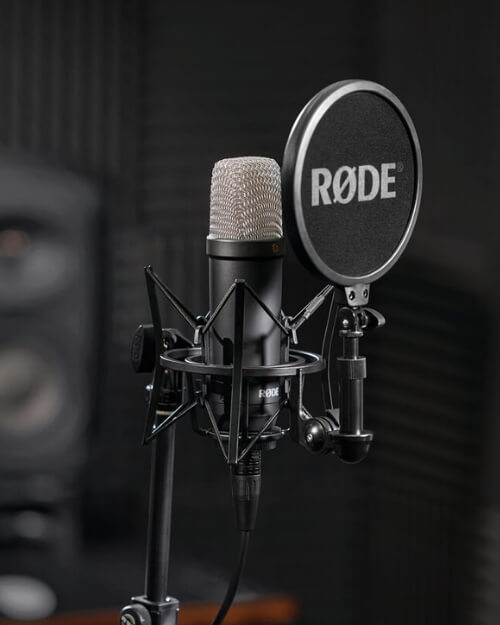


Creator Guides
How to Start a Podcast in Bangladesh: Gear, Setup and Budget (2026)
Oct
Creator guide · Podcasting · Beginner
Everything you need to start a podcast in Bangladesh, from a ৳14,000 solo USB setup to a two-person video studio, with the exact gear we would buy at each budget.
Quick answer
To start a podcast in Bangladesh you need a microphone, closed-back headphones and a laptop or phone. A solo audio podcast with a USB microphone such as the Maono PD200X costs about ৳14,000 in total. A two-person audio podcast with XLR mics and an interface costs about ৳83,000, and a two-person video podcast about ৳2.5 lakh.
সংক্ষেপে
পডকাস্ট শুরু করতে লাগবে একটি মাইক্রোফোন, ক্লোজড-ব্যাক হেডফোন আর একটি ল্যাপটপ বা মোবাইল। একা কথা বললে USB মাইক্রোফোন যথেষ্ট, আলাদা সাউন্ড কার্ড লাগে না; মোট খরচ প্রায় ১৪,০০০ টাকা। দুজন হলে দুটি XLR মাইক আর দুই ইনপুটের অডিও ইন্টারফেস নিন, খরচ প্রায় ৮৩,০০০ টাকা। ভিডিও পডকাস্টে ক্যামেরা ও লাইট যোগ করলে খরচ প্রায় আড়াই লাখ টাকা। শব্দময় ঘরে ডায়নামিক মাইক্রোফোন সবচেয়ে ভালো কাজ করে।
1. Pick your podcast format first
The format decides almost every purchase, so settle it before you look at microphones. Ask two questions: how many people speak in the room, and will you publish video (YouTube and Facebook) or audio only (Spotify, Apple Podcasts)?
| Format | What you need | Budget |
|---|---|---|
| Phone podcast one or two people, on the go | A wireless clip-on mic into your phone | from ৳940 |
| Solo audio one host, online classes, voice-over | USB mic, headphones, boom arm | about ৳14,000 |
| Solo, studio sound one host who wants room to grow | XLR mic, audio interface, headphones, arm | about ৳60,000 |
| Two-person audio interviews, co-hosts | 2 XLR mics, 2-input interface with 2 headphone outputs | about ৳83,000 |
| Two-person video the “studio podcast” look | All of the above, plus a camera and two lights | about ৳2.5 lakh |
Remote guests on Zoom or Google Meet do not change your hardware: you still need a good mic for yourself, and you ask the guest to wear earphones so their voice does not echo back.
2. Choose a microphone: USB or XLR, dynamic or condenser
This is the single most important purchase. Two choices matter more than the brand.
USB or XLR?
A USB microphone plugs straight into your laptop. It has its own built-in sound card, so you do not need anything else. It is the right choice for one person recording at a desk.
An XLR microphone needs an audio interface between it and the computer. You pay more, but you can record two or more people on one computer, swap mics later, and get better sound from the same money once you go past about ৳15,000.
A USB + XLR hybrid gives you both: start on USB today, move to an interface later without buying a new mic. For most new podcasters in Bangladesh this is the best first microphone.
Two people, two USB mics, one laptop? It rarely works well. Windows and macOS do not like recording from two USB mics at once, and the two recordings drift out of sync. Two people should use XLR mics and a 2-input interface.
Dynamic or condenser?
Most Bangladeshi homes have a ceiling fan, hard walls, traffic outside and neighbours. A dynamic microphone mostly hears what is right in front of it, so it ignores much of that. A condenser microphone hears everything in the room: more detail, but also more fan, echo and horn. For podcasts, choose dynamic unless your room is quiet and treated.
Our picks
| Microphone | Type | Good for | Price |
|---|---|---|---|
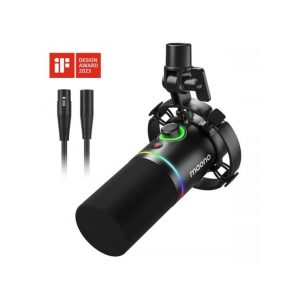
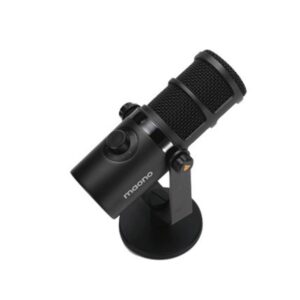
| Maono PD200X | Dynamic, USB + XLR | Best first mic. Start on USB, grow into XLR | ৳5,890 |
| Fifine AmpliGame AM8 | Dynamic, USB + XLR | Same idea, with RGB for streamers | ৳6,980 |
| Maono PD400X | Dynamic, USB + XLR | Step-up hybrid with on-mic controls | ৳11,490 |
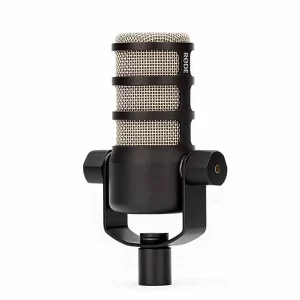
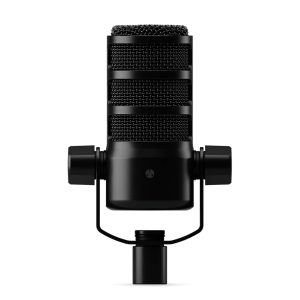
| Rode PodMic | Dynamic, XLR | The classic podcast look and sound; needs a strong interface | ৳16,490 |
| Shure SM58 | Dynamic, XLR | Nearly indestructible; also great for live vocals | ৳16,990 |
| Audio-Technica AT2040 | Dynamic, XLR | Very good at rejecting room noise | ৳15,990 |
| Rode XDM-100 | Dynamic, USB | Premium USB-only mic for solo creators | ৳28,500 |
| Rode PodMic USB | Dynamic, USB + XLR | Premium hybrid; heavy, needs a strong arm | ৳32,990 |
3. Audio interface: do you need one?
Only if you use XLR microphones. An audio interface turns the mic signal into clean digital audio for your computer, and amplifies it. If you bought a USB microphone, skip this section: a USB-only mic cannot plug into an interface at all.
- MicrophoneXLR dynamic or condenser
- XLR cableone per mic
- Audio interfacegain, phantom power, headphone out
- Laptop or PCover USB-C
Three things to check:
- Inputs: one XLR input per person.
- Headphone outputs: one per person who needs to hear the recording. Many interfaces have only one.
- Gain: popular podcast mics like the Rode PodMic and Procaster are quiet. They need about 60 dB of clean gain. Interfaces below that work, but you turn the knob almost to maximum and hear more hiss.
| Interface | Mic inputs | Headphone outs | Gain | Price |
|---|---|---|---|---|
| Focusrite Vocaster One Studio (includes a mic and headphones) | 1 | 1 | about 70 dB | ৳16,990 |
| Focusrite Scarlett Solo 4th Gen | 1 | 1 | about 57 dB | ৳17,000 |
| Focusrite Scarlett 2i2 4th Gen | 2 | 1 | about 69 dB | ৳24,900 |
| Focusrite Vocaster Two | 2 | 2 | about 70 dB | ৳26,500 |
| Focusrite Clarett+ 4Pre | 4 | 2 | about 57 dB | ৳76,990 |
Our pick
For one person on a budget, the Vocaster One Studio is hard to beat: interface, microphone and headphones in one box. For two people, the Vocaster Two is the simplest choice because it has two mic inputs and two headphone outputs, plus a phone input for call-in guests.
What about all-in-one podcast mixers? Compact units like the Maonocaster Lite AU-AM200 (৳6,490) add sound-effect pads, voice effects and a phone connection, and suit live streams on a phone. For two XLR studio mics with separate headphones, an interface like the Vocaster Two is the cleaner option.
4. Headphones: closed-back and wired
Wear headphones while you record, so you hear problems (a rustling shirt, a mic too far away) before they ruin a whole episode. Choose closed-back headphones, so sound does not leak back into the mic, and wired ones, because Bluetooth adds a delay that makes you hear yourself late.
- Maono MH700: the budget choice, ৳4,500.
- Audio-Technica ATH-M20x: our default for guests and co-hosts, ৳7,990.
- Sennheiser HD 200 Pro: comfortable for long sessions, ৳9,990.
- Audio-Technica ATH-M40x: accurate enough to edit on, ৳14,990.
5. Boom arm, pop filter and cables
- Boom arm: it keeps the mic 5 to 10 cm from your mouth, where dynamic mics sound best, and stops desk bumps reaching the recording. Heavy mics need a strong arm: the Rode PodMic weighs about 0.94 kg and the PodMic USB about 1.1 kg, so use the Maono BA37 (৳4,000) or BA92 (৳6,200). The Maono BA20 is for light USB mics only.
- Pop filter or foam: stops the “p” and “b” sounds from thumping. The Platinum PPF1 costs ৳1,490.
- XLR cables: one for each XLR mic. Ask our team when you order; they are not always listed online.
- Video only: a fast memory card (V30 or better) for the camera.
6. Going video: camera and lights
Video podcasts are now the norm on YouTube and Facebook in Bangladesh. Your audio gear stays the same; you add a camera and soft light.
Camera
For a podcast the camera sits still for an hour or more, so three features matter more than megapixels:
- Runs on mains or USB-C power, so the battery does not die halfway through.
- Works as a USB webcam, so you can record or stream straight into the laptop.
- Does not stop recording after a time limit.
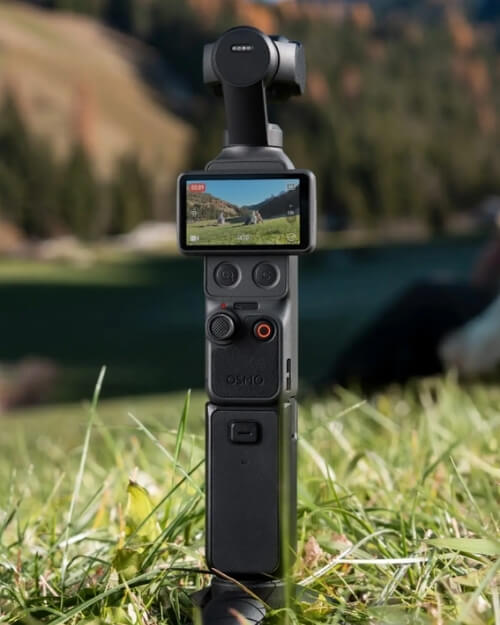
The Sony ZV-E10 II (৳1,04,490) runs from USB-C power and works as a plug-and-play webcam, so it is our default. Older bodies like the ZV-E10 and a6400 need a dummy-battery adapter for long sessions. The DJI Osmo Pocket 3 (৳39,990) is a compact alternative, but it has no microphone socket: record audio on your interface and sync it later, or pair a DJI wireless mic. For a second camera angle, a second ZV-E10 II or the Sony a6700 works.
Lights
One soft light per person, placed to the side of the camera and a little above eye level, makes the biggest difference. Bi-colour lights let you match daylight from a window or the warm bulbs in your room.
- Godox ML60Bi (৳22,990) with the Godox ML-SF50 softbox (৳4,790): quiet, compact, our default.
- Godox SL60IID (৳13,990): cheaper, Bowens mount, so it fits Phottix Raja softboxes.
- An RGB tube or stick behind you, such as the Yongnuo YN360 II, adds the coloured background you see on most video podcasts.
Check the mount. Godox ML-series lights use the Godox ML mount and do not fit Bowens softboxes like the Phottix Raja without an adapter. Godox SL-series lights use Bowens.
7. Your room, noise and load-shedding
A ৳30,000 microphone in a noisy, echoing room sounds worse than a ৳6,000 one in a quiet, soft room. Before buying anything more, fix these:
- Turn off the ceiling fan while recording. Microphones pick it up more than you expect.
- Record when the street is quiet, usually late at night or early morning in Dhaka.
- Add soft things: a rug, curtains, a sofa, a bookshelf. Bare walls and tiled floors cause echo. A wardrobe full of clothes behind you works like free acoustic treatment.
- Speak close to a dynamic mic, 5 to 10 cm, and keep the gain lower. Your voice gets louder relative to the room.
- Plan for load-shedding. USB mics and most interfaces are powered by the laptop, so a charged laptop keeps recording through a power cut. Put the router, lights and camera power on a UPS or IPS, or use battery-powered lights.
8. Recording, editing and publishing
- Record and edit audio: Audacity is free and enough to start. Focusrite interfaces come with their own software bundle.
- Record video: OBS Studio (free) records the camera and your interface audio together, and can stream to YouTube or Facebook at the same time.
- Remote guests: use a platform that records each person locally, or ask the guest to record their own side on their phone as a backup.
- Publish: upload the video episode to YouTube and Facebook, and the audio version to Spotify (through Spotify for Creators) and Apple Podcasts so listeners can find you everywhere.
- Back up every raw recording before you edit. Losing an interview to a crashed laptop is a common, painful story.
9. Four ready-made podcast setups (prices on 9 Oct 2026)
Each setup is a complete, compatible kit. Open the Podcast Setup Builder to change any part and see the bundle price.
Solo · XLR
Studio sound
about ৳60,380
- Rode PodMic ৳16,490
- Scarlett 2i2 4th Gen ৳24,900
- ATH-M40x ৳14,990
- Maono BA37 arm ৳4,000
- plus 1 XLR cable
Two people · Audio
Interview show
about ৳83,460
- 2 × Rode PodMic ৳32,980
- Focusrite Vocaster Two ৳26,500
- 2 × ATH-M20x ৳15,980
- 2 × Maono BA37 arm ৳8,000
- plus 2 XLR cables
Two people · Video
Video podcast studio
about ৳2,46,290
- Everything in Interview show
- Sony ZV-E10 II ৳1,04,490
- 2 × Godox ML60Bi ৳45,980
- 2 × Godox ML-SF50 ৳9,580
- 2 × light stand ৳2,780
- plus a V30 memory card
Every order over ৳5,000 can be paid in 3 to 36 month EMI with 30+ banks, which spreads a studio-sized setup into a monthly cost. See the bank list.
10. Five mistakes we see every week
- Buying an audio interface for a USB-only mic. It will not connect. Interfaces are for XLR mics.
- Buying a condenser mic for a noisy room. It records the fan, the echo and the street. Choose dynamic.
- Two USB mics on one laptop. Use XLR mics and a 2-input interface instead.
- A Rode PodMic on a small interface or a light arm. It needs about 60 dB of gain and a strong boom arm.
- Forgetting the second headphone output. Your co-host needs to hear the recording too. Vocaster Two has two outputs; the Scarlett 2i2 has one.
Ready to build?
Build your podcast setup in two minutes
Pick a microphone, interface, headphones and lights in our Podcast Setup Builder. It only shows gear that works together and applies the bundle discount at checkout.
Frequently asked questions
How much does it cost to start a podcast in Bangladesh?
About ৳14,000 for a solo podcast with a USB microphone, headphones and a boom arm. A solo XLR setup costs about ৳60,000, a two-person audio podcast about ৳83,000, and a two-person video podcast with a camera and two lights about ৳2.5 lakh. You can start with a phone and a ৳940 clip-on mic.
Can I start a podcast with just my phone?
Yes. Clip a wired lavalier like the Boya BY-M1 or a wireless mic like the DJI Mic Mini to your shirt and record into your phone. It is a good way to test your idea before buying a desk setup.
Should I buy a USB or XLR microphone for podcasting?
USB if you record alone at a desk and want the simplest setup. XLR if two or more people record together or you want to upgrade parts later. A USB + XLR hybrid like the Maono PD200X lets you start on USB and move to XLR without replacing the mic.
Do I need an audio interface for a podcast?
Only for XLR microphones. A USB microphone connects straight to your computer and cannot be plugged into an interface.
Which microphone is best for a noisy room?
A dynamic microphone, used 5 to 10 cm from your mouth. It picks up much less fan, echo and street noise than a condenser.
Can two people use USB microphones on one laptop?
Not reliably. Computers handle two USB mics badly and the recordings drift out of sync. Use two XLR mics and a 2-input interface such as the Focusrite Vocaster Two.
পডকাস্ট শুরু করতে কত টাকা লাগে?
একা USB মাইক্রোফোন, হেডফোন আর বুম আর্ম দিয়ে প্রায় ১৪,০০০ টাকা। দুজনের অডিও পডকাস্টে প্রায় ৮৩,০০০ টাকা, আর ক্যামেরা ও লাইটসহ ভিডিও পডকাস্টে প্রায় আড়াই লাখ টাকা।
পডকাস্টের জন্য কোন মাইক্রোফোন কিনব?
বাসার সাধারণ ঘরে ডায়নামিক মাইক্রোফোন সবচেয়ে ভালো, কারণ এটি ফ্যান ও রাস্তার শব্দ কম ধরে। শুরুতে Maono PD200X এর মতো USB + XLR মাইক নিলে পরে অডিও ইন্টারফেসে আপগ্রেড করা যায়।
USB মাইক্রোফোনের সাথে কি সাউন্ড কার্ড লাগে?
না। USB মাইক্রোফোন সরাসরি ল্যাপটপে লাগে। অডিও ইন্টারফেস বা সাউন্ড কার্ড শুধু XLR মাইক্রোফোনের জন্য দরকার।